Sally Lunn Bread is one of those recipes that feels like it has been passed down in the family through many generations.
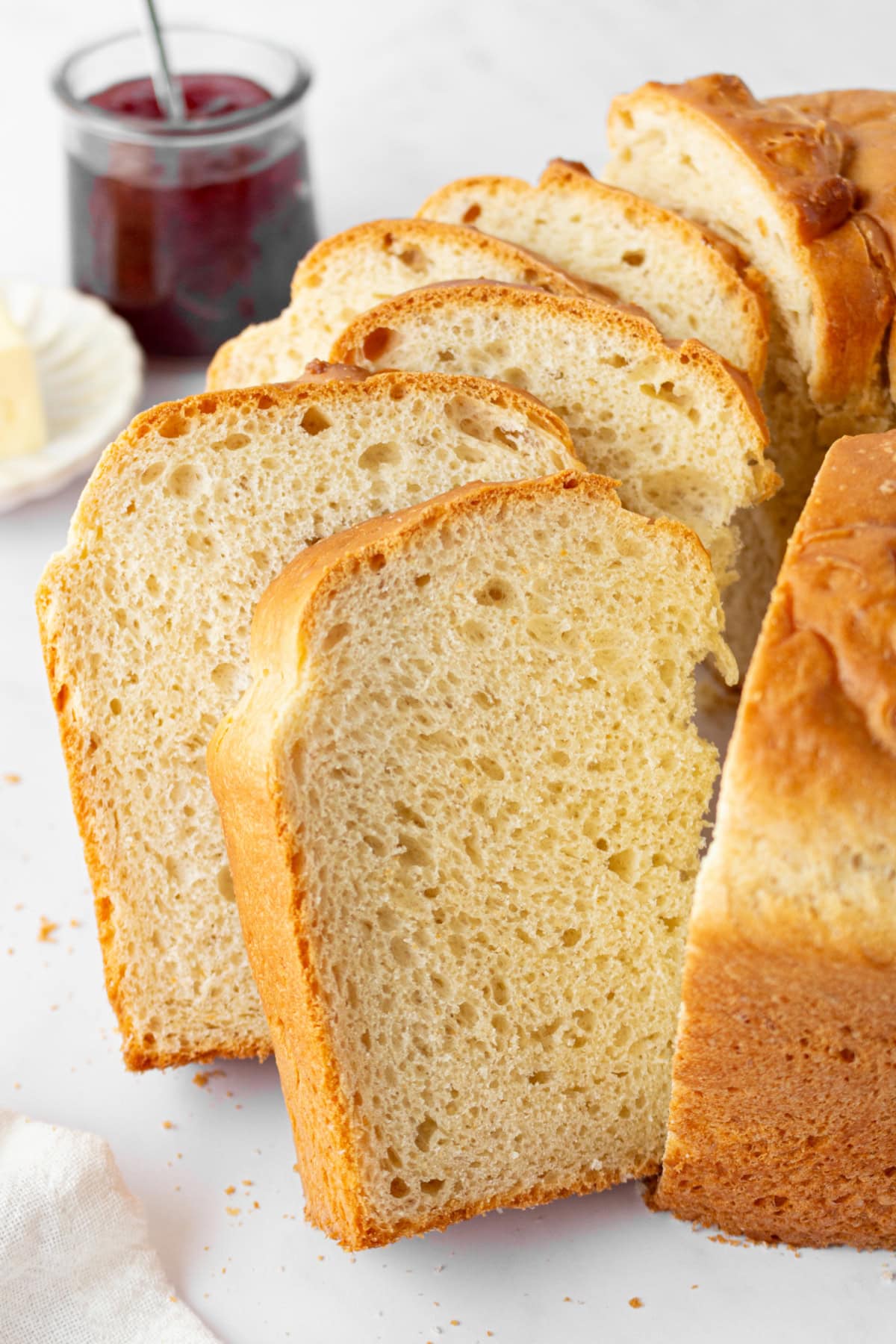
It’s soft, slightly rich, lightly sweet and baked in a tall, golden loaf that makes it a little different from your everyday bread. Slice it warm, add butter (and maybe a little strawberry jam), and you’ll understand why this old-fashioned yeast bread favorite has stuck around for so long.
If you love baking homemade yeast breads, you might also consider trying our recipes for English muffin bread, Dutch oven bread and sweet challah bread.
The Story Behind Sally Lunn Bread
Sally Lunn bread isn’t just a recipe—it has a bit of history behind it.
The bread is believed to have originated in Bath, England in the 1700’s, where a woman named Sally Lunn (possibly a French Huguenot baker originally named Solange Luyon) became known for baking a rich, brioche-like bread.
Her version was lighter and softer than traditional breads of the time, and it quickly became popular. Over the years, the recipe made its way to America, where it evolved into the version we know today—slightly sweet, tender and often baked in a tube pan for that signature shape.
What is Sally Lunn Bread?
This isn’t quite bread… and it’s not quite cake.
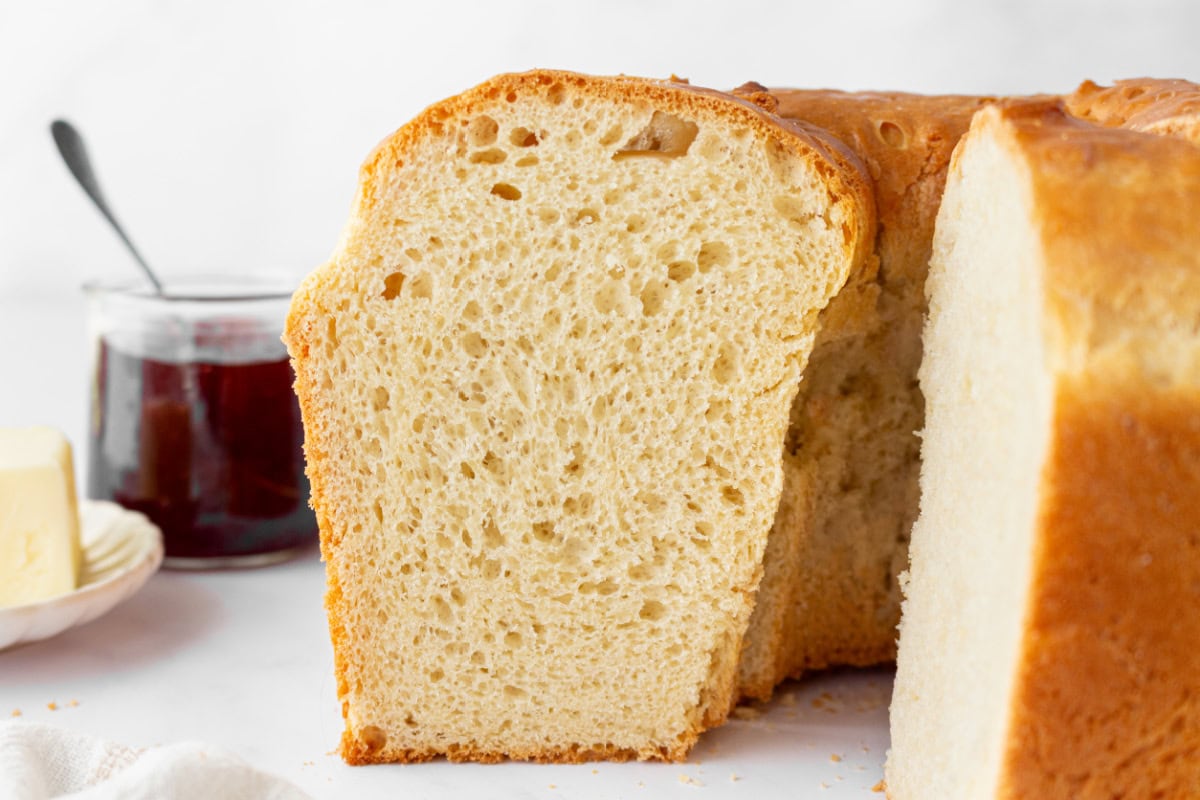
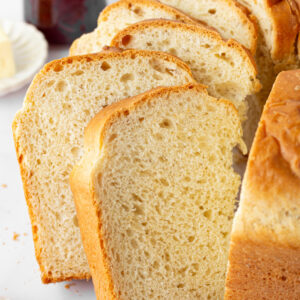
It lands somewhere in between. It’s softer and richer than standard bread. It’s lightly sweet, but not dessert-level. And it has a light, airy texture with a tender crumb. It’s perfect for slicing thick and serving warm.
The Texture (This Is What You’ll Notice First)
This bread bakes up golden on the outside, soft and fluffy inside, and it’s slightly buttery with a delicate crumb. It tastes just as good plain as it does when it’s dressed up with butter and jam.
Why It’s Baked in a Tube Pan
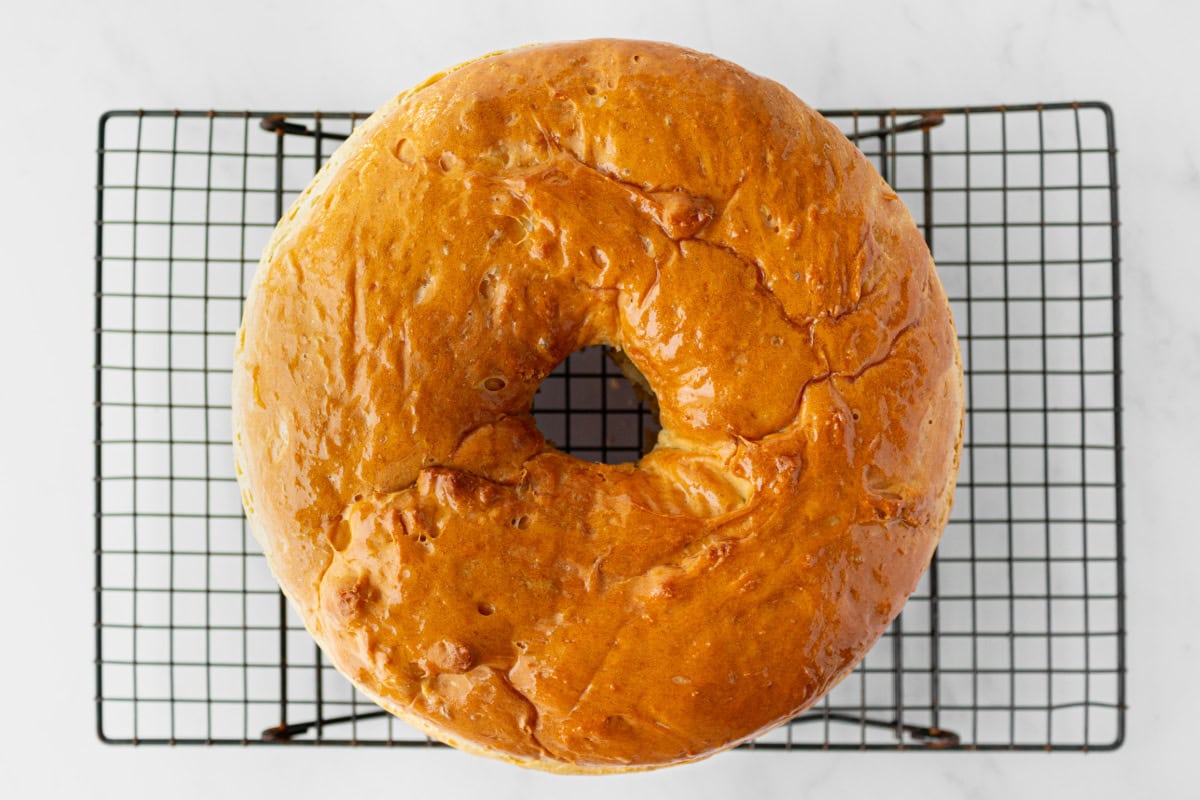
The tube pan isn’t just for looks. It helps the dough bake evenly and create that tall, classic shape. And it allows more surface area to develop that golden crust.
Recipe Tips
- Use properly warm liquids: Too hot can kill the yeast—too cool won’t activate it.
- Let it rise fully: This is what gives you that light texture.
- Don’t rush the second rise: It helps create that signature height.
- Remove from the pan right away: Prevents the crust from getting soggy.
How to Serve It
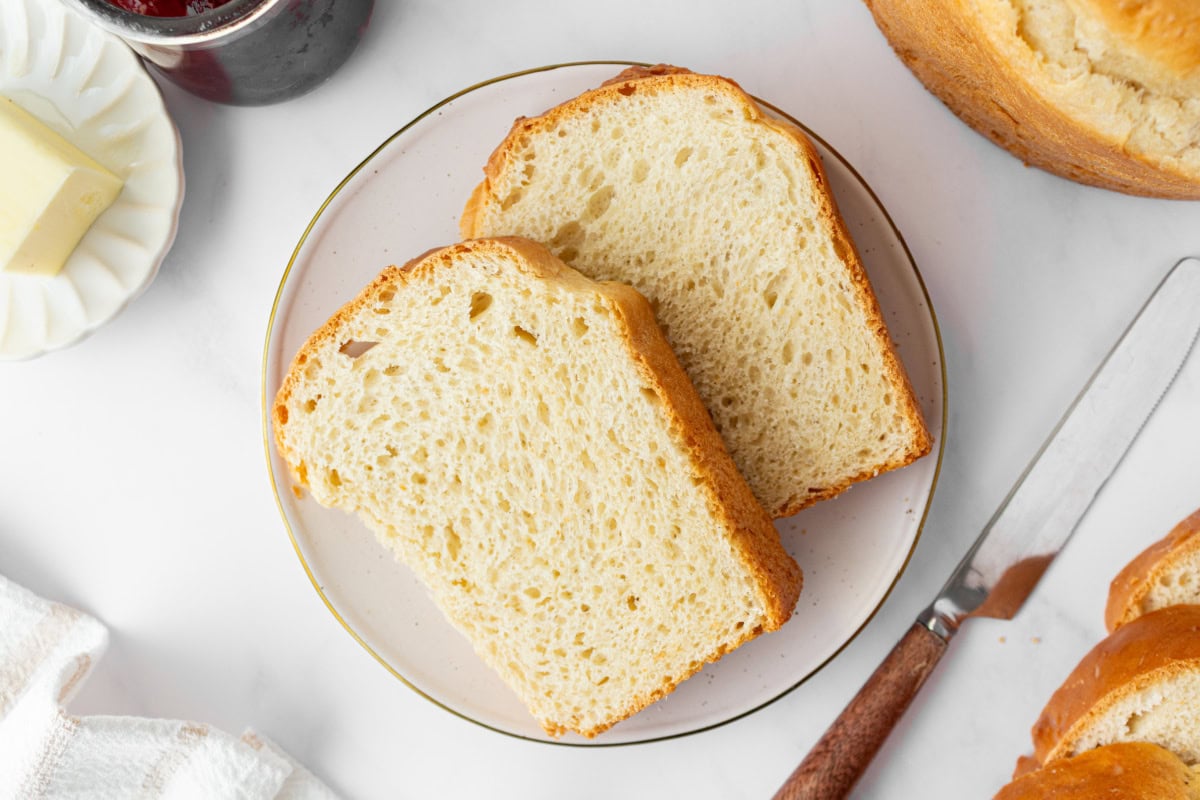
Sally Lunn bread is perfect for serving at brunch (alongside a quiche), holidays mornings, afternoon tea or even just as the bread served with a home-cooked meal like beef stew.
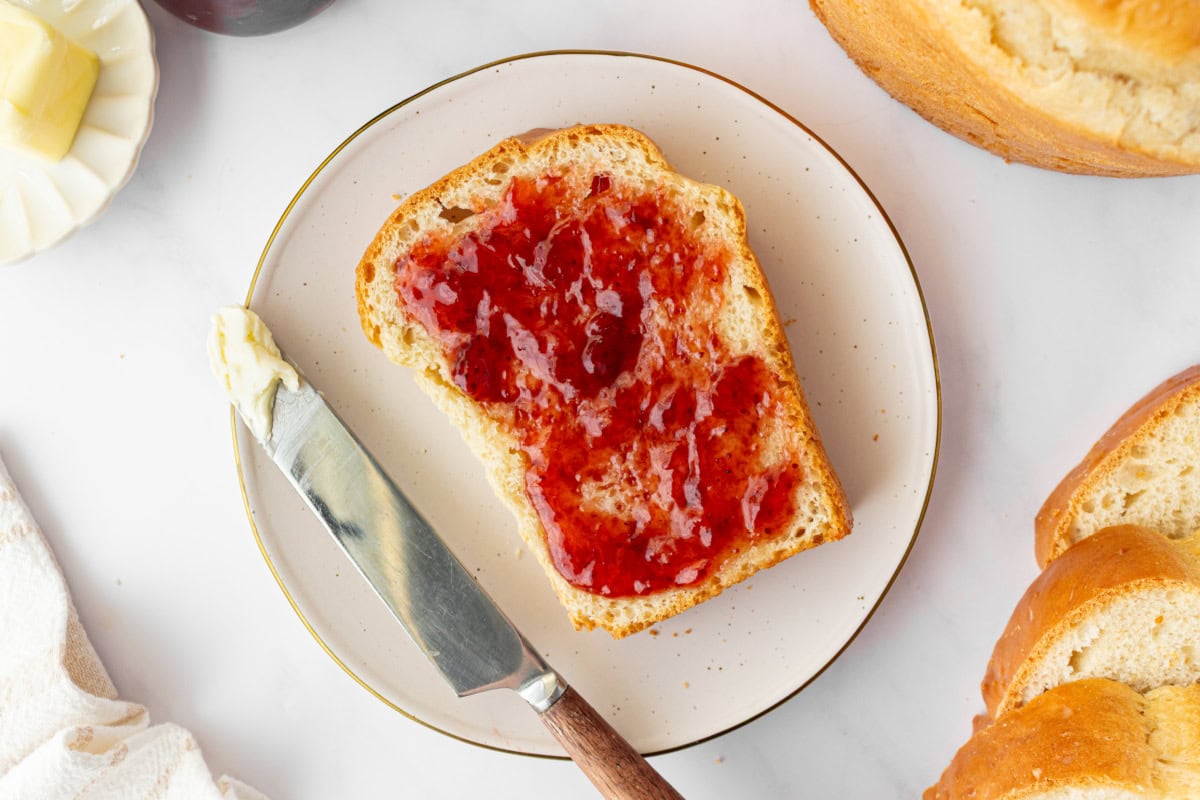
Serve it warm with softened butter, and it’s wonderful served with jam or honey. It’s pretty delicious when toasted too, so consider that if it’s a day or two old.
🍞 VARIATIONS
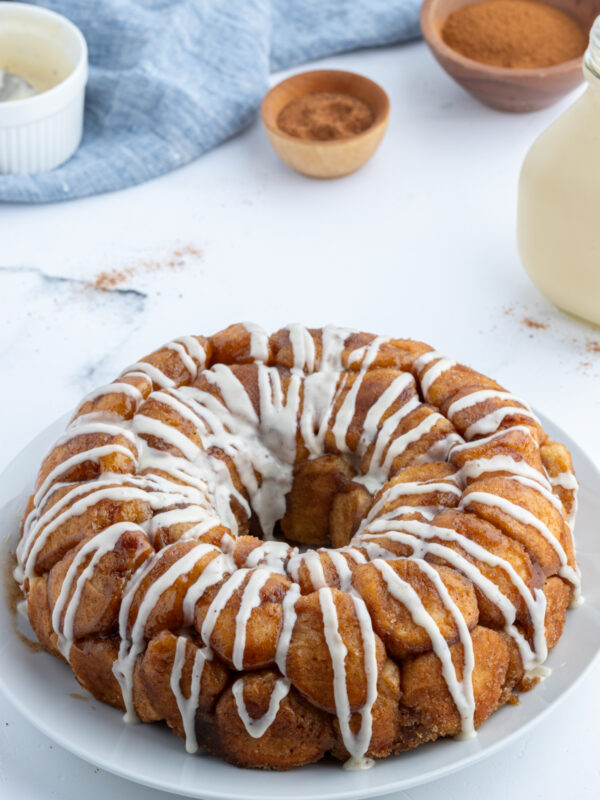
- Cinnamon Sally Lunn Bread: Add a swirl of cinnamon sugar for a sweet twist.
- Citrus Version: Add orange or lemon zest to the dough.
- Raisin Sally Lunn: Fold in raisins for a more traditional feel.
- Savory Version: Reduce sugar slightly and add herbs for a savory bread.
- Almond Version: Add a touch of almond extract for a subtle flavor shift.
🔍 FAQ
- What is Sally Lunn bread? Sally Lunn bread is a classic, slightly sweet yeast bread with a soft, airy texture. It’s richer than typical white bread and often compared to a light brioche.
- Why is it called Sally Lunn bread? The name is believed to come from Sally Lunn, a baker in Bath, England in the 1700s who became known for her signature bread.
- Is Sally Lunn bread the same as brioche? Not exactly. Brioche is richer and more buttery. Sally Lunn is lighter and less sweet. It sits somewhere between bread and cake.
- Can I make Sally Lunn bread ahead of time? Yes! Bake the day before, and store covered at room temperature. Warm slices before serving for best flavor.
- Can this bread be frozen? Absolutely. Wrap it tightly, and freeze up to 2 months. Thaw and warm before serving.
Sally Lunn
Ingredients
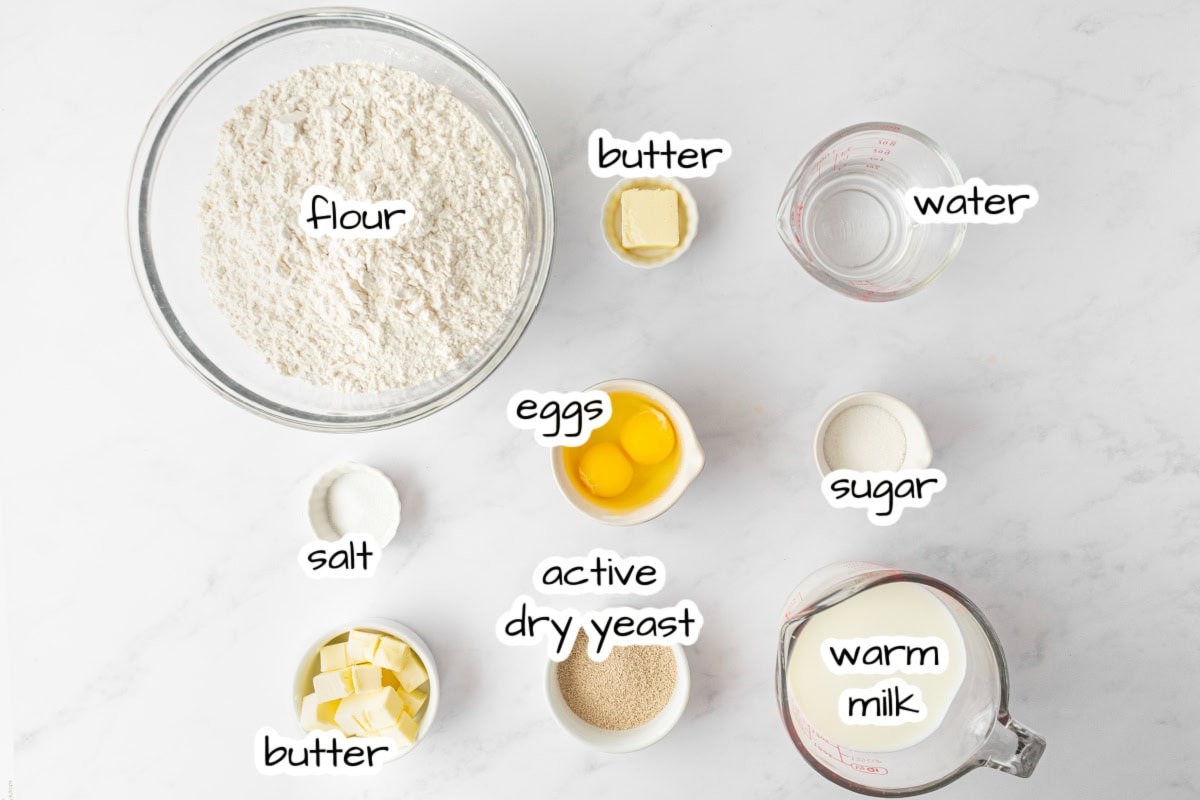
- ½ cup very warm water (120°F to 130℉)
- Two .25-ounce envelopes active dry yeast (or 2¼ teaspoons)
- 5½ cups all purpose flour
- 1½ cups very warm milk (120°F to 130℉)
- ¼ cup (½ stick) butter, cut into small pieces
- 2 tablespoons granulated white sugar
- 1 teaspoon salt
- 2 large eggs
- 1 tablespoon butter
- softened butter and jam, for serving
Instructions
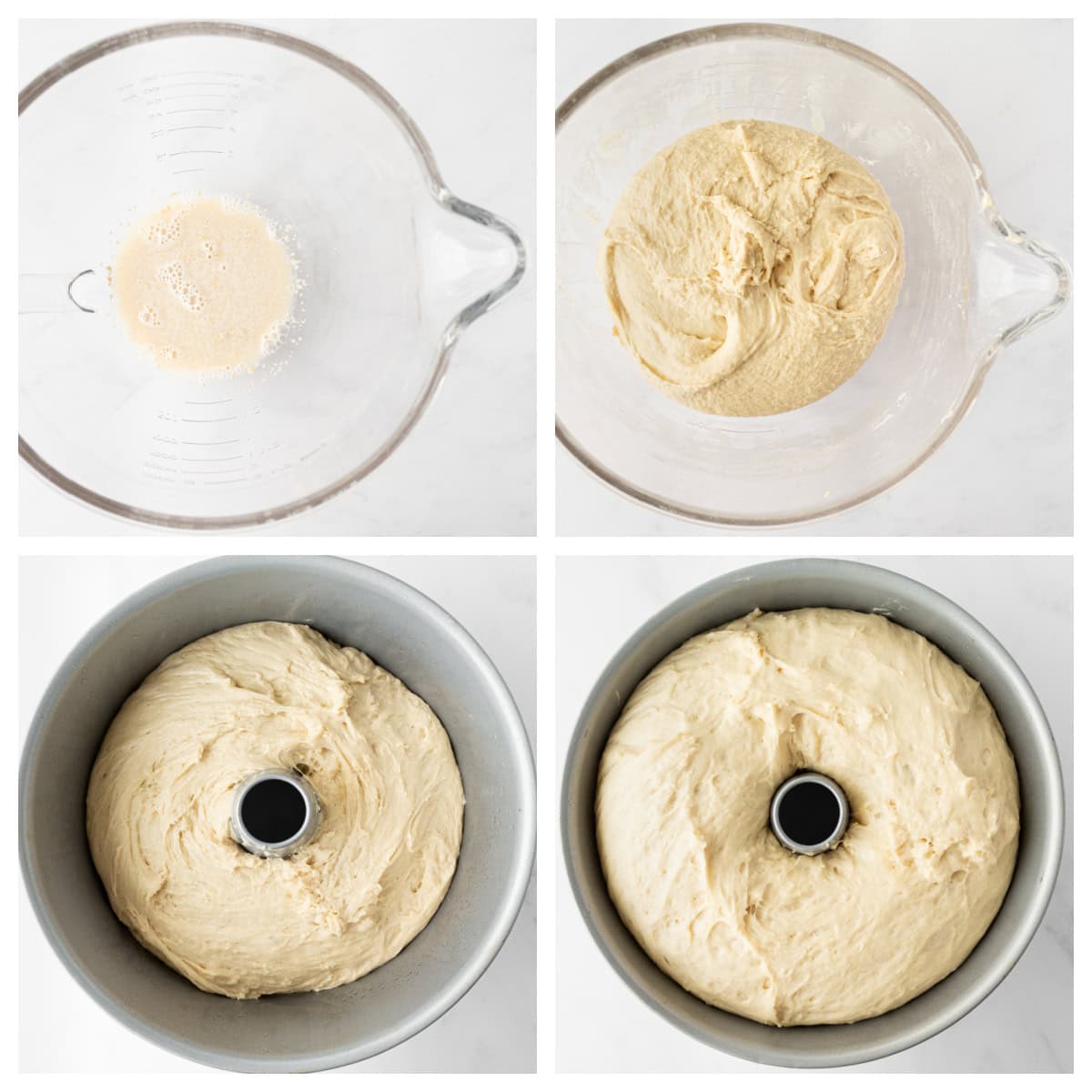
- In a large bowl, combine the warm water and yeast; stir until dissolved. Stir in all of the remaining ingredients except the 1 tablespoon butter. Beat with a spoon until the dough pulls cleanly away from the side of the bowl and is smooth (alternately, you can do this with the dough hook on a stand mixer). Cover the bowl loosely with plastic wrap. Let it rise in a warm place about 1 hour or until doubled in size.
- Grease or spray a 10-inch tube pan with cooking spray. Punch down the risen dough with a spoon. Pour the dough evenly into the pan. Cover with plastic wrap; let rise in a warm place about 30 minutes or until the dough is about 1-inch below the top of the pan.
- Preheat the oven to 350℉. Bake the loaf for 45 to 50 minutes or until golden brown. Immediately remove the bread from the pan using a knife to loosen the edges if necessary; place the bread on a wire rack. Brush the warm bread with 1 tablespoon of butter. Serve warm slices with butter and jam.
Notes
- Use warm—not hot—liquids for yeast
- Let dough fully rise for best texture
- Remove from pan immediately after baking
- Serve warm for best flavor
Nutrition
Nutrition information is automatically calculated, so should only be used as an approximation.